
Bringing a puppy into your home comes with a multitude of joys, but it also involves new responsibilities, one of which is grooming. Grooming is not just about keeping your puppy looking tidy—it’s an essential part of their overall health and well-being. Proper grooming helps maintain your puppy’s coat, keeps their skin healthy, and strengthens the bond between you and your new pet. Whether you’re new to dog ownership or just looking for some guidance, this beginner’s guide will help you navigate the grooming process with ease and confidence.
1. Understanding Your Puppy’s Coat Type
Before you start grooming, it’s important to understand your puppy’s coat type, as different coats require different care. Puppies come in various breeds, and each has unique grooming needs based on their coat’s texture, length, and thickness.
a. Short Coats
Puppies with short coats tend to shed less and are generally easier to groom. A simple brushing with a soft-bristle brush or grooming mitt will help remove loose hair and dirt, and stimulate blood flow to the skin.
b. Long Coats
Long-haired puppies need more attention. Regular brushing is essential to prevent tangling and matting. You’ll want to use a pin brush or comb, depending on the length and texture of the hair, and be sure to work through any tangles gently.
c. Curly or Wavy Coats
Breeds with curly or wavy coats, such as Poodles or Cockapoos, require more frequent grooming to prevent matting. These coats may need to be trimmed or professionally groomed regularly, especially as your puppy grows.
2. Getting Your Puppy Comfortable with Grooming
One of the first steps in grooming is to help your puppy become comfortable with being handled. Early positive experiences are key to setting up a successful grooming routine.
a. Introduce Grooming Slowly
Begin grooming your puppy gently from the first few weeks of their arrival. Slowly introduce them to the grooming tools, such as brushes, clippers, and nail trimmers, by letting them sniff and get used to the objects. Gradually start using them on your puppy, ensuring you offer plenty of praise and treats to associate the experience with positive outcomes.
b. Start with Short Sessions
In the beginning, keep grooming sessions short and simple to avoid overwhelming your puppy. Aim for 5 to 10-minute sessions, gradually increasing the duration as your puppy becomes accustomed to the routine.
c. Use Gentle Techniques
Always handle your puppy gently, especially when grooming sensitive areas like their paws, ears, or face. Use soft brushes or combs and avoid any harsh movements that might cause discomfort.
3. Bathing Your Puppy
Bathing your puppy is an essential part of grooming, but it’s important to ensure the experience is not stressful for them. Bathing too often can strip your puppy’s coat of natural oils, so it’s important to only bathe them when necessary.
a. Choose the Right Shampoo
Puppy skin is more sensitive than adult dog skin, so it’s important to use a gentle, puppy-specific shampoo. These are formulated to be mild and safe for young dogs, ensuring their skin doesn’t dry out or become irritated.
b. Prepare for Bath Time
Before bathing your puppy, make sure the water is lukewarm, not too hot or cold, as extreme temperatures can be uncomfortable. If your puppy is small, you can use a sink or a small tub; larger puppies may need to be bathed in a bathtub or shower.
c. Gentle Bathing Process
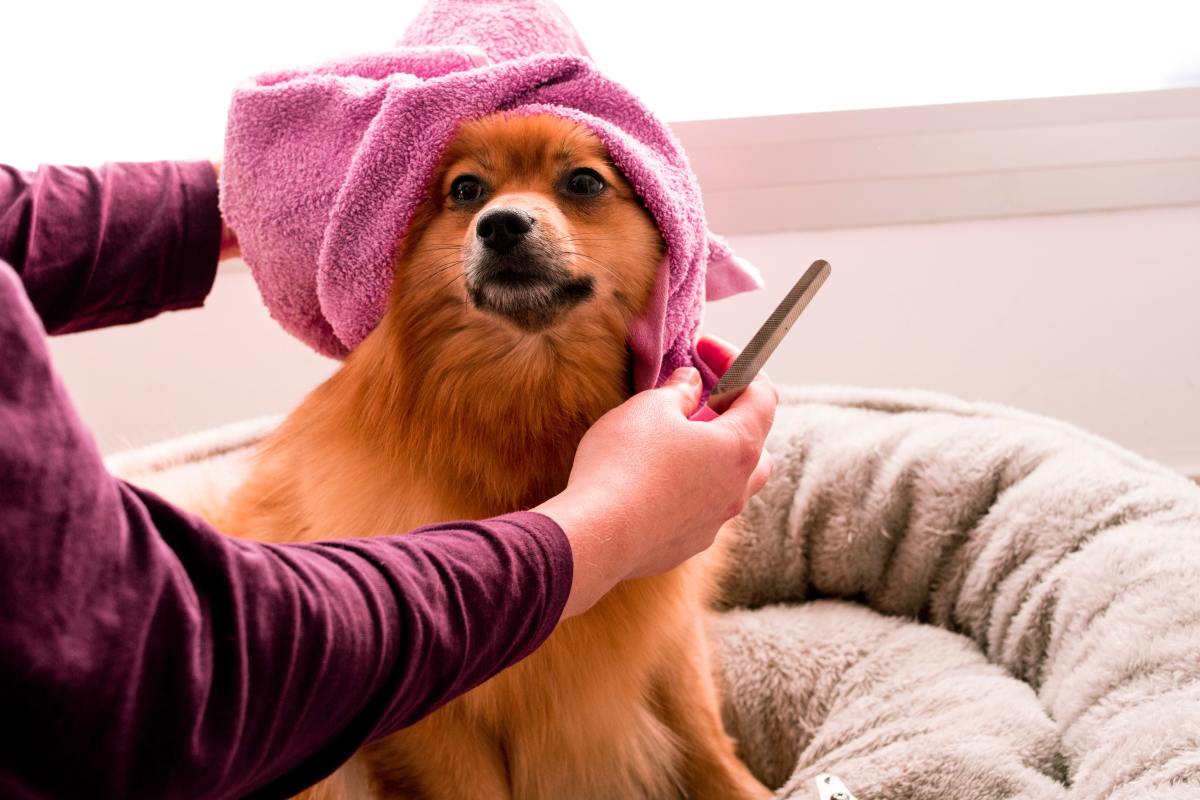
Wet your puppy’s coat slowly with a cup or handheld sprayer, avoiding their face and ears. Apply a small amount of puppy shampoo, lather gently, and rinse thoroughly. Be sure to avoid getting water or soap in your puppy’s eyes, ears, and nose. Once done, towel-dry your puppy gently, and you can use a hairdryer on a low, cool setting to dry them if they’re comfortable with the sound.
4. Brushing Your Puppy’s Coat
Regular brushing is a key component of your puppy’s grooming routine, especially for breeds with long or thick coats. Brushing removes tangles, prevents matting, and keeps your puppy’s coat shiny and healthy.
a. Select the Right Brush
The type of brush you use depends on your puppy’s coat. A slicker brush works well for long-haired puppies, while a bristle brush is better for short-haired breeds. For curly coats, a comb or de-matting tool is best.
b. Brush in the Right Direction
When brushing, start from the base of the coat and work your way up, brushing in the direction of hair growth. Be gentle, particularly in areas that may become matted. Take your time to work through tangles carefully and never pull too hard, as this could cause discomfort or even injury.
c. Make Brushing a Routine
Ideally, you should brush your puppy several times a week, especially as they shed their baby coat and begin growing their adult coat. For longer-haired puppies, daily brushing is often necessary to prevent knots and mats.
5. Trimming Nails
Trimming your puppy’s nails is an important aspect of grooming that can help avoid discomfort or even injury. Long nails can snag on carpets, cause your puppy to walk awkwardly, or lead to painful conditions like ingrown nails.
a. Choose the Right Nail Trimmer
There are different types of nail trimmers available, including guillotine-style and scissor-style trimmers. Choose one that you feel comfortable using. For beginners, a scissor-style clipper is often easier to handle.
b. Trim Slowly and Carefully
Be cautious not to cut into the quick—the pink part inside the nail that contains blood vessels and nerves. If your puppy has light-colored nails, the quick will be more visible, making it easier to avoid. Dark nails can be trickier, so you may need to trim gradually and carefully, cutting small amounts at a time.
c. Praise and Reward
As with all aspects of grooming, it’s essential to keep your puppy calm and positive during nail trimming. Use treats and praise throughout the process to reward them for their cooperation.
6. Cleaning Your Puppy’s Ears and Eyes
Maintaining your puppy’s ears and eyes is also crucial in their grooming routine. Keeping their eyes and ears clean helps prevent infections and discomfort.
a. Check Ears Regularly
Puppies with floppy ears are more prone to ear infections, so it’s essential to check their ears regularly. Clean them with a cotton ball or gauze pad moistened with an ear-cleaning solution designed for dogs. Avoid using cotton swabs, as they can damage the ear canal.
b. Wipe Eyes Gently
Use a damp cloth or specialized pet wipe to clean around your puppy’s eyes, removing any debris or discharge. This is particularly important for breeds with long hair around the eyes, as this can cause irritation.
7. Teeth Brushing
Oral hygiene is just as important as coat care. Begin brushing your puppy’s teeth as soon as possible to avoid dental issues later in life.
a. Use Puppy-Specific Toothpaste
Never use human toothpaste on your puppy. Use a special dog toothpaste that is safe for them to swallow. You can use a soft toothbrush designed for puppies, or even a finger brush.
b. Start Slowly
Introduce your puppy to brushing gradually. At first, you can simply rub their gums with your finger, then move on to using the toothbrush. Brushing a few times a week is generally sufficient to maintain good oral hygiene.
8. Visit the Groomer When Necessary
While at-home grooming is essential, professional grooming can be beneficial for certain tasks. If your puppy has a breed that requires regular trims or specialized care, scheduling regular grooming sessions with a professional can help maintain their coat and prevent tangles or mats from forming.
Final Thoughts
Grooming is an important responsibility for puppy owners. By starting early, using the right tools, and building a positive experience, grooming can be an enjoyable and rewarding routine for both you and your puppy. As your puppy grows, regular grooming will not only enhance their appearance but also contribute to their overall health and happiness. With the proper grooming habits in place, your puppy will not only look good but feel good too.